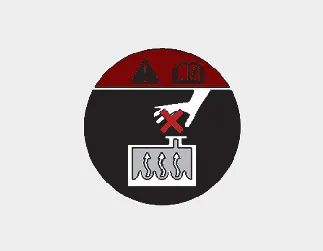
The Kia Carnival cooling system is pressurized. Always inspect the coolant level only when the engine is completely
cold to ensure accurate readings and your personal safety.
Never attempt to remove the Kia Carnival engine coolant reservoir cap while the engine is still operating or remains
hot. The cooling system is under high pressure; opening the cap while hot may result in a violent spray of boiling
coolant or pressurized steam, which can cause severe personal injury or catastrophic damage to your engine
components.
Before proceeding, ensure the engine is turned off and has been allowed to cool down for a significant period. When
you are ready to remove the cap, use extreme care: wrap a thick, dry towel securely around the reservoir cap. Turn it
counterclockwise slowly until you reach the first stop. Step back immediately while the residual pressure is safely
released from the Kia Carnival cooling system.
Once you are certain all pressurized vapor has been vented, press down firmly on the cap using your towel-wrapped
hand, and continue turning counterclockwise to remove it completely.
Even if the Kia Carnival engine is not currently running, never remove the reservoir cap or the radiator drain plug
while the engine and radiator are still hot. High-pressure steam or hot liquid may still be trapped within the
system, posing a significant risk of injury.
 WARNING
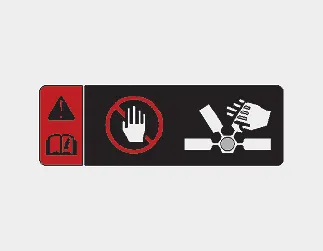
The Kia Carnival is equipped with an electric motor (cooling fan) that is intelligently controlled based on engine
coolant temperature, refrigerant pressure, and current vehicle speed. Please be aware that the fan may activate
automatically even when the ignition is off. Exercise extreme caution when working near the engine bay to avoid
injury from the rotating fan blades. As the engine temperature decreases, the electric motor will automatically shut
off; this is a standard operating condition.
Note that the cooling fan may remain active until the negative battery cable is physically disconnected.
Regularly check the condition and integrity of all cooling system hoses and heater hoses. If you observe any
swelling, signs of dry rot, or visible deterioration, have those hoses replaced immediately to prevent a sudden
coolant leak while driving.
When the Kia Carnival engine is cool, the coolant level should always be between the "MAX" and "MIN" (or "F" and "L")
marks on the side of the transparent reservoir. If the level is below the "L" mark, carefully add a mixture of
distilled (deionized) water and the recommended coolant. Bring the fluid level up to the "MAX" (F) mark, but be
careful not to overfill the reservoir.
If you find that you must add coolant frequently, there may be a leak in your Kia Carnival cooling system. In such
cases, have the system inspected by an authorized Kia dealer.
 NOTICE
Always ensure the coolant reservoir cap is properly tightened and seated after refilling. A loose or incorrectly
installed cap can lead to a loss of system pressure and result in engine overheating while driving.
-
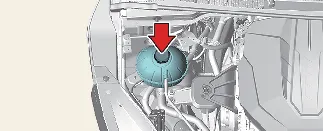
After refilling, check that the label on the Kia Carnival coolant reservoir cap is aligned straight up.

-
Ensure that the tiny locking protrusions inside the Kia Carnival coolant cap are securely interlocked with the
reservoir neck.
-
When topping up the cooling system of your Kia Carnival, use only distilled, deionized, or soft water. Never
use "hard" water, as it contains mineral deposits that can cause internal scaling and significantly reduce the
efficiency of the factory-filled coolant, potentially leading to serious engine damage.
-
Your Kia Carnival engine features precision-engineered aluminum components. To prevent internal corrosion,
cavitation, and freezing, you must exclusively use a high-quality, phosphate-based ethylene-glycol coolant
specifically formulated for aluminum engine protection.
-
NEVER use alcohol-based, methanol-based, or silicate-free coolants in your Kia Carnival, as these are
incompatible with the cooling system materials and will cause severe damage.
-
Maintain the correct concentration: Do not use a solution containing more than 60% antifreeze or less than 35%
antifreeze. Deviating from these limits will impair the cooling system's ability to protect your Kia Carnival
engine against both extreme heat and freezing temperatures.
Please refer to the following table to determine the correct mixture ratio for your climate:
| Ambient Temperature |
Antifreeze (Volume %) |
Water (Volume %) |
| 5 °F (-15 °C) |
35 |
65 |
| -13 °F (-25 °C) |
40 |
60 |
| -31 °F (-35 °C) |
50 |
50 |
| -49 °F (-45 °C) |
60 |
40 |
 WARNING
Under no circumstances should you remove the engine coolant reservoir cap while the Kia Carnival engine or radiator
are hot. The system is pressurized, and the sudden release of scalding hot coolant and high-pressure steam can result
in severe, life-altering burns.

 CAUTION