Regularly following the maintenance procedures for your Kia Carnival exterior helps preserve the factory finish. A
clean exterior is not only aesthetically pleasing but also serves as a protective layer, significantly prolonging the
life of the paint, trim, and body panels of your Kia Carnival.
 NOTICE
Be aware that parking your Kia Carnival near reflective surfaces like stainless steel signs or glass-fronted
buildings can focus sunlight onto your vehicle. This intense reflected light can cause permanent heat damage to
plastic exterior components, such as the bumpers, spoilers, trim pieces, headlamp housings, and outside mirrors. To
prevent such damage, always try to park away from these reflections or use a protective vehicle cover when parking
your Kia Carnival in exposed areas for extended periods.
Exterior general caution
Proper maintenance of your Kia Carnival requires careful attention to the products you use. It is essential to
strictly follow the manufacturer's directions when utilizing any chemical cleaner or polishing agent on your vehicle.
Always read and adhere to all warning and caution statements provided on the product labels to ensure the safety and
longevity of your Kia Carnival exterior finishes.
Finish maintenance
Washing
To preserve the pristine finish of your Kia Carnival and protect it from rust, corrosion, and environmental
deterioration, we recommend a thorough wash at least once a month using lukewarm or cold water.
If your Kia Carnival is frequently used for off-road adventures, it is critical to wash the vehicle after every trip.
Pay particular attention to the undercarriage and lower body panels to remove accumulations of salt, road grime, mud,
and other foreign debris. Additionally, ensure that the drain holes located along the lower edges of the doors and
rocker panels remain clear to prevent moisture entrapment.
Environmental contaminants such as insect residue, road tar, tree sap, bird droppings, and industrial fallout can
cause permanent damage to the paintwork of your Kia Carnival if not addressed promptly. While a simple rinse with
water may not be sufficient for these deposits, a mild soap specifically formulated for automotive painted surfaces
may be used. Always rinse the vehicle thoroughly with cool or lukewarm water after washing, and ensure that soap
residue is not allowed to dry on the finish.
 CAUTION
-
Avoid using harsh soaps, industrial chemical detergents, or hot water. Never wash your Kia Carnival in direct
sunlight or while the body panels are still warm to the touch, as this can lead to streaking and spotting.
-
Exercise caution when washing the side windows, particularly when using high-pressure equipment. Excessive
water pressure can force water through window seals, potentially dampening the interior upholstery of the Kia
Carnival.
-
To prevent irreversible damage to sensitive plastic components, trim, and light lenses, never use chemical
solvents or aggressive abrasive detergents.
High-pressure washing
When operating high-pressure washing equipment on your Kia Carnival, always maintain a safe, recommended distance
from the vehicle's body. Insufficient clearance or excessive water pressure can cause immediate damage to delicate
components, exterior trim, or paint integrity, and may force water into sensitive areas.
Crucially, do not spray the parking cameras, proximity sensors, or their immediate surrounding areas directly with
high-pressure water. The impact of high-pressure jets can cause these advanced electronic components to malfunction.
Furthermore, keep the nozzle tip away from rubber boots, bellows, or electrical connectors, as the pressure can
breach the seals and cause water ingress.
 CAUTION
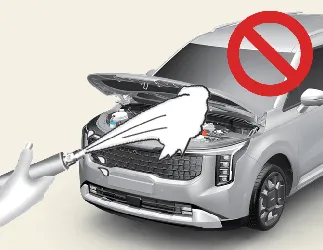
Wetting engine compartment
-
Water intrusion into the engine compartment, especially from high-pressure washing, can lead to the failure of
vital electrical circuits and modules within the Kia Carnival.
-
Never allow water or other cleaning liquids to contact electrical/electronic components or the air intake
ducts, as this will likely result in permanent damage to the Kia Carnival powertrain systems.
-
After a thorough wash, drive carefully and test your brakes frequently in safe traffic conditions until the
normal braking performance of your Kia Carnival has been fully restored.
Waxing
A simple test to determine if your Kia Carnival requires waxing is to observe whether water still forms beads on the
paint surface; if not, it is time to apply a fresh layer of protection.
Always perform a complete wash and dry cycle before applying any wax. Use a high-quality liquid or paste wax,
following the manufacturer's specific application instructions. Applying wax to all metal trim will also help
maintain its luster and prevent oxidation. If you use a spot remover to clean off oil or tar, remember that this will
strip the wax from that specific area, so you must re-wax these spots to ensure consistent protection for the Kia
Carnival finish. Be very careful not to get wax on the lamp lenses.
 CAUTION
Drying vehicle
-
Never attempt to wipe dust or dry dirt off the Kia Carnival body with a dry cloth, as this will act like
sandpaper and scratch the clear coat finish.
-
Do not use steel wool, abrasive cleaning pads, or detergents containing strong acids, high alkalinity, or
caustic agents on chrome-plated or anodized aluminum parts. Using these products can destroy the protective
coating, leading to discoloration, pitting, or premature paint deterioration of your Kia Carnival.
Finish damage repair
Any deep scratches, chips, or abrasions reaching the base metal on your Kia Carnival should be addressed as quickly
as possible. If the bare metal remains exposed to the elements, it will rapidly develop oxidation and rust,
potentially leading to widespread paint degradation and significant, costly repairs down the road.
 NOTICE
If your Kia Carnival suffers from body damage requiring metalwork or component replacement, always verify that your
selected body shop applies professional-grade anti-corrosion treatments to any repaired or replaced panels. This
ensures the factory-standard protection levels are maintained throughout the life of your Kia Carnival.
Bright-metal maintenance
To safely remove stubborn road tar, insect remains, or other sticky contaminants from the chrome and bright-metal
trim on your Kia Carnival, always use a dedicated automotive tar remover. Never attempt to use scrapers, razor
blades, or other sharp metal objects, as these will permanently scratch the finish.
To preserve the pristine appearance and corrosion resistance of these surfaces, apply a high-quality protective wax
or specialized chrome preservative, and buff the area to a high luster. During the winter months or if you live in
coastal, salt-rich environments, we recommend applying a heavier, more frequent coating of protective wax or
preservative to your Kia Carnival bright-metal parts. In extreme conditions, you may even consider applying a thin
layer of non-corrosive petroleum jelly or a similar long-term protective compound to prevent salt-induced pitting.
Underbody maintenance
In regions with harsh winters, road salt and other aggressive de-icing chemicals are commonly used to clear roads. If
these corrosive materials are not washed away regularly, they will severely degrade the underbody of your Kia
Carnival. Over time, this chemical exposure can damage critical systems, including the fuel lines, fuel tank
retention straps, suspension components, the exhaust system, and even the structural integrity of the main body
frame.
To ensure maximum safety and reliability, authorities, including the National Highway Traffic Safety Administration
(NHTSA), advise all vehicle owners to follow these essential maintenance steps:
-
Wash the undercarriage of your Kia Carnival regularly throughout the winter season, particularly after driving
on roads treated with salt or liquid de-icing agents.
-
Perform a comprehensive, high-volume undercarriage wash immediately following the conclusion of the winter
season to remove all residual salt buildup.
-
Utilize professional service centers or government inspection stations to conduct an annual, thorough
inspection for any signs of hidden underbody corrosion.
-
If you observe visible flaking, scaling, or sudden changes in your vehicle's handling, immediately seek a
professional inspection. Indicators of concern include a spongy brake pedal feel, visible fluid leaks, loss of
steering control, unusual noises from the suspension, or metallic rattling sounds from rusted support straps.
Aluminum wheel maintenance
The alloy wheels on your Kia Carnival are protected by a specialized, high-gloss clear protective finish that
requires specific care to maintain.
-
Never use abrasive cleaning pads, harsh polishing compounds, chemical solvents, or wire brushes on your Kia
Carnival aluminum wheels, as these will permanently mar the clear coat finish.
-
Always wait for the wheels to cool down completely before starting the cleaning process to avoid thermal shock.
-
Use only mild, pH-neutral automotive soap or detergent, and rinse the wheels thoroughly with clean water. Be
especially diligent about cleaning your wheels after driving on salted winter roads to prevent long-term
corrosion.
-
Avoid using automated high-speed vehicle wash brushes, which can be overly aggressive and may scratch the
finish of your wheels.
-
Steer clear of any strong alkaline or highly acidic detergents. Such chemical cleaners can rapidly penetrate
the clear protective finish and cause unsightly, permanent corrosion on your Kia Carnival wheels.
Corrosion protection
Protecting your Kia Carnival from corrosion
Kia utilizes state-of-the-art design, high-quality materials, and advanced manufacturing techniques to ensure your
Kia Carnival is built with superior corrosion resistance. However, maintaining this factory-level protection
throughout the vehicle's lifespan requires proactive cooperation and regular maintenance from the owner.
Common causes of corrosion
Corrosion typically develops due to exposure to environmental elements. The most frequent culprits affecting your Kia
Carnival include:
-
The accumulation of road salt, abrasive dirt, and moisture trapped in the undercarriage, wheel wells, and
hidden cavities beneath the vehicle.
-
Damage to the factory-applied paint or protective undercoating caused by road debris, gravel, minor scrapes, or
parking lot dents. Such damage leaves bare metal exposed, creating an easy entry point for rust to begin its
expansion.
High-corrosion areas
If your Kia Carnival is regularly operated in environments with harsh weather or specific industrial conditions,
enhanced corrosion protection is vital. Factors that significantly accelerate the corrosion process include heavy
road salt usage, chemical dust control treatments, salt-heavy ocean air in coastal regions, and high levels of
industrial airborne pollution.
Moisture breeds corrosion
Moisture is the primary catalyst for oxidation. Corrosion rates increase dramatically in high-humidity environments,
especially when temperatures hover just above freezing, as this climate prevents moisture from evaporating quickly,
keeping corrosive agents in constant contact with the Kia Carnival metal surfaces.
Mud is uniquely hazardous because it acts as a sponge. Even when mud appears dry on the surface, it retains internal
moisture that holds corrosive salts against the metal frame of your Kia Carnival for extended periods. Furthermore,
high ambient temperatures can accelerate chemical reactions, particularly in areas where poor ventilation prevents
moisture from dispersing naturally. Consequently, it is imperative to keep your vehicle consistently clean, ensuring
that mud and other debris do not build up on visible body panels or within the chassis underside.
To help prevent corrosion
You can effectively safeguard your Kia Carnival against early-stage corrosion by observing the following preventive
measures:
Keep your vehicle clean
The most effective strategy to inhibit the formation of rust is to maintain a rigorous cleaning schedule for your Kia
Carnival, ensuring the body and chassis remain free from corrosive substances. Providing dedicated attention to the
underside of the Kia Carnival is particularly essential for long-term durability.
If you reside in a high-corrosion environment—such as areas that utilize heavy road salts, coastal regions with high
salinity, or locations prone to industrial pollution and acid rain—you must exercise increased vigilance. During the
winter months, we recommend hosing off the undercarriage of your Kia Carnival at least once a month, followed by a
comprehensive, deep cleaning of the underbody once the winter season concludes to flush away any residual salt.
When performing this maintenance, prioritize the components hidden deep within the fender wells and other non-visible
areas. Ensure your cleaning process is thorough; simply dampening the accumulated mud can inadvertently create a
moist, conductive environment that accelerates corrosion rather than preventing it. Utilizing high-pressure water
jets or steam cleaners is the most professional and effective method to dislodge compacted mud and neutralize
corrosive deposits from your Kia Carnival.
Furthermore, when cleaning the lower door panels, rocker panels, and structural frame members, always verify that the
factory drain holes remain clear of debris. These passages are critical to allow moisture to escape, preventing it
from being trapped inside the panels where it would otherwise promote hidden corrosion.
Keep your garage dry
Avoid parking your Kia Carnival in a damp, poorly ventilated garage, as this environment can significantly foster the
development of corrosion. This is especially problematic if you wash your vehicle inside the garage or drive into the
space while the Kia Carnival is still coated in snow, ice, or slush. Even if your garage is heated, it can still
contribute to rust unless it is equipped with a robust ventilation system designed to extract humidity and allow the
vehicle to dry completely.
Keep paint and trim in good condition
Small scratches, nicks, or stone chips in your Kia Carnival finish should be addressed immediately using
factory-matched "touch-up" paint. Prompt sealing of these imperfections prevents moisture from reaching the base
metal and significantly reduces the risk of long-term rust. If the damage has progressed to the point where bare
metal is visible, we strongly recommend a visit to a qualified body and paint shop to ensure a professional,
rust-resistant repair.
Bird droppings: Bird droppings possess highly acidic, corrosive properties that can etch into the
clear coat of your Kia Carnival in as little as a few hours. To maintain the integrity of your paint, always remove
these droppings as soon as they are discovered.
Don't neglect the interior
Hidden moisture often accumulates beneath the floor mats and carpeting, which can lead to corrosion of the vehicle's
floor pan. Periodically lift the mats and inspect the carpet underneath to ensure it remains dry. Exercise extreme
caution if you must transport fertilizers, cleaning supplies, or industrial chemicals in your Kia Carnival.
These hazardous materials should only be transported in secure, leak-proof containers. In the event of a spill or
leak, the affected area must be cleaned immediately, flushed thoroughly with fresh water, and dried completely to
prevent chemical damage to the interior components of your Kia Carnival.