Smart Cruise Control malfunction
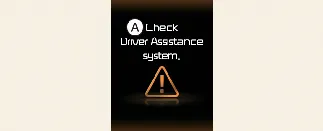
A: Check Driver Assistance system
If the Smart Cruise Control (SCC) system in your Kia Carnival experiences an internal fault, a warning message will
appear on the instrument cluster. While this message may clear after a brief period, the Master warning light ( ) will remain illuminated to signify that the system requires
attention. If this occurs, please have your Kia Carnival inspected by an authorized Kia dealer to ensure the system
is restored to full functionality.
Smart Cruise Control disabled
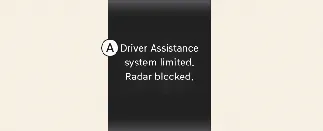
A: Driver Assistance system limited. Radar blocked.
The Kia Carnival Smart Cruise Control system relies on a front-mounted radar sensor. If the radar cover or the sensor
housing is obstructed by foreign materials—such as heavy snow, ice, mud, or thick rain—the system's detection range
and accuracy will be significantly reduced, leading to a temporary suspension of SCC features.
When this blockage is detected, you will see a warning message and the Master warning light ( ) on your instrument cluster. Please
note that this is a protective response rather than a permanent hardware failure. The system is designed to resume
normal operations automatically once the radar sensor is cleared of debris. For your safety, always ensure the front
grille area of your Kia Carnival is kept clean.
 WARNING
It is important to understand that the Smart Cruise Control system may experience operational degradation even if a
specific warning message is not displayed on your instrument cluster. Always remain prepared to take manual control
of your Kia Carnival if the vehicle behaves unexpectedly.
 CAUTION
The Kia Carnival SCC system may face challenges operating in vast, open spaces lacking detectable lead vehicles or
reference landmarks. Additionally, if the detecting sensor is compromised by foreign material immediately upon
starting the vehicle, the system may fail to initialize properly until the obstruction is removed.
 NOTICE
If you suspect a system limitation, you can verify the status of your Kia Carnival safety features by navigating to
the "Service" message section within the utility information view of the instrument cluster display.
Limitations of Smart Cruise Control
While the Smart Cruise Control (SCC) system in your Kia Carnival is engineered with advanced sensor technology to
enhance driving comfort, it may not function as intended under certain challenging environmental or traffic
conditions. Please exercise heightened caution and be ready to resume manual control if you encounter any of the
following scenarios:
-
Sensor Obstructions: The detecting radar or camera sensors are contaminated with dirt, mud, or
snow, or have sustained physical damage.
-
Weather Interventions: Heavy rain, thick fog, or snow storms significantly impair visibility.
Additionally, the system may be affected if your windshield wipers are operating continuously or if washer
fluid is being sprayed, which can momentarily obscure the front-view camera.
-
Windshield Impairments: The front-view camera’s performance is compromised by a tinted,
filmed, or coated windshield, or by physical obstructions like stickers, insect residue, or cracks in the
glass. Similarly, moisture, condensation, or ice on the windshield that has not been fully cleared will hinder
detection.
-
Lighting Challenges: Severe sun glare, driving into or out of tunnels where brightness changes
abruptly, extremely dark conditions (such as tunnels or unlit roads without sufficient headlight illumination),
or blinding reflections from wet road surfaces can cause the Kia Carnival system to struggle.
-
Internal/External Factors: Placing objects on the instrument panel can interfere with camera
sensors. Furthermore, extreme ambient temperatures around the camera or front radar modules may temporarily
limit functionality.
-
Lead Vehicle Detection Issues: The system may have difficulty if a vehicle in front is
partially obscured, has non-standard or missing taillights, or has an unusual orientation (e.g., tilted,
overturned, or abnormal ground clearance). Vehicles covered in snow or those made of materials that do not
reflect radar signals effectively can also lead to missed detections.
-
Dynamic Traffic Scenarios: Sudden cut-ins, abrupt lane changes, rapid deceleration of the
vehicle ahead, or vehicles being momentarily blocked by obstacles can delay the reaction time of your Kia
Carnival SCC.
-
Complex Road Geometry: Driving on sharp curves, roundabouts, or continuously in circles can
hinder the sensor's ability to maintain a steady lock on the vehicle ahead.
-
Vehicle Stability and State: Unstable driving patterns, excessive vehicle vibration due to
poor road surfaces, or significant changes in vehicle height (caused by heavy loads or improper tire pressure)
can adversely affect sensor alignment and performance.
-
External Interference: Your Kia Carnival may experience system limitations if the vehicle is
being towed, or if the system is subjected to strong electromagnetic wave interference. Additionally, impacts
to the bumper area around the front radar can cause misalignment.
Driving in the following locations
-
Navigating through parking lots, construction zones, or unpaved/partially paved roads.
-
Driving over speed bumps, uneven surfaces, or along roads characterized by significant inclines or frequent
curves.
-
Traveling on roads lined with dense trees, streetlights, or narrow passages with overgrown foliage, which can
create visual clutter for the Kia Carnival sensor systems.
-
Areas subject to electromagnetic interference, such as proximity to high-power radio transmitters or zones with
intense electrical noise.
-
Passing through tunnels, crossing iron bridges, or driving near large metallic structures like railroad tracks
and heavy construction sites.
-
Operating the Kia Carnival in wide-open, desolate areas with minimal traffic or distinct structural reference
points, as well as environments filled with steam, smoke, or deep shadows.
-
Approaching busy highway interchanges or tollgates where traffic patterns are complex.
-
Navigating Curves:
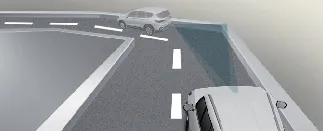
On winding roads, the Kia Carnival Smart Cruise Control may temporarily lose detection of a vehicle in your
lane, potentially causing the system to accelerate to the set speed. Conversely, speed may decrease abruptly if
a lead vehicle is suddenly identified. Always modulate your set speed and remain ready to use the brake or
accelerator pedal to maintain control based on current road geometry.
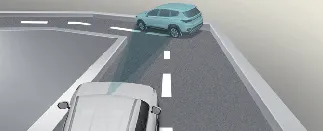
Note that your speed may occasionally fluctuate due to traffic in adjacent lanes. Continuously monitor your
surroundings and apply the brake if necessary to ensure your Kia Carnival maintains a safe following distance.
-
Driving on Inclines:
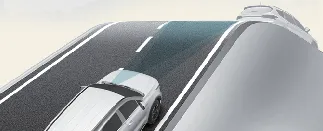
During ascent or descent, the system might struggle to track moving vehicles in your lane, which may lead to
unwanted acceleration. Be prepared to intervene manually with the brake or accelerator to adjust your speed
relative to the road conditions.
-
Changing Lanes:
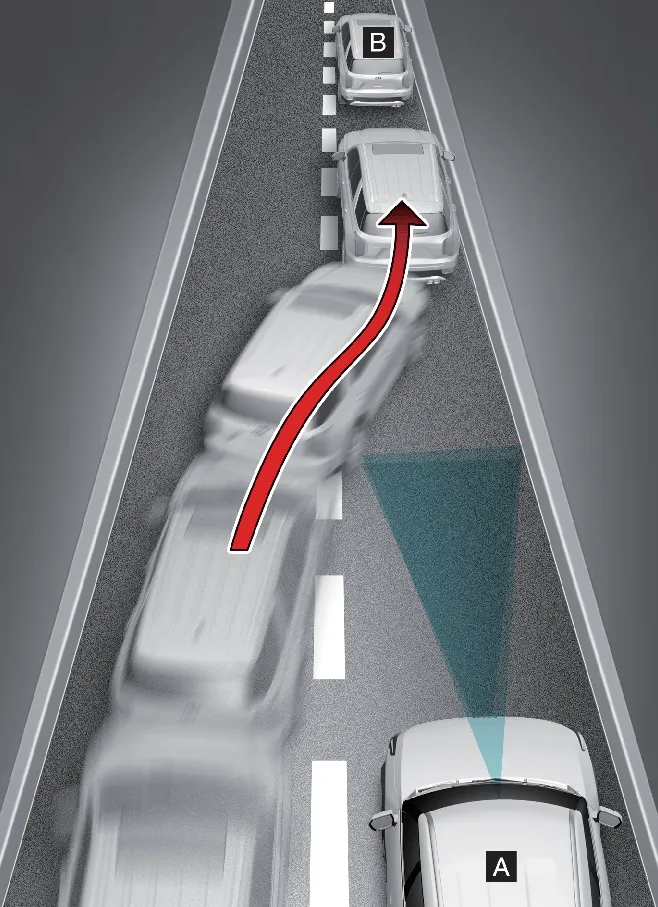
-
[1]: Your Kia Carnival
-
[2]: Vehicle changing into your lane
When a vehicle abruptly merges into your lane, the system can only detect it once it fully enters the sensor's
range. Because of this, the Kia Carnival may not react instantly to sudden lane changes. You must proactively
maintain a safe braking distance and depress the brake pedal whenever a rapid merge occurs to avoid a
collision.
Detecting a vehicle
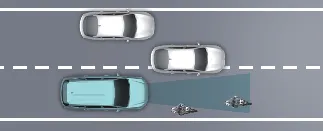
While the Smart Cruise Control (SCC) system is highly advanced, there are specific traffic scenarios where the Kia
Carnival sensors may fail to detect a vehicle in your lane. It is essential to remain vigilant in the following
situations:
-
Offset Positioning: Vehicles that are not centered within their lane.
-
Speed Dynamics: Very slow-moving vehicles or those that suddenly decelerate.
-
Vehicle Geometry: Vehicles with high ground clearance, loads extending from the rear, or
lifted front-ends due to heavy cargo.
-
Proximity: Objects located within approximately 6 ft (2 m) of your Kia Carnival.
-
Traffic Direction: Oncoming traffic.
-
Stationary Objects: Vehicles that are completely stopped.
-
Small Profiles: Trailers with small rear profiles, motorcycles, bicycles, or other narrow
vehicles.
-
Specialty Transport: Specialized machinery or oversized vehicles.
-
Vulnerable Road Users: Animals and pedestrians.
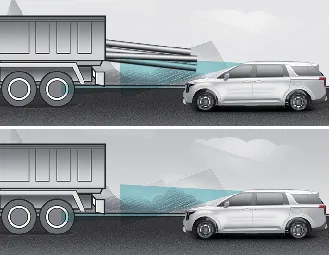
Furthermore, the Kia Carnival sensors may struggle to track a lead vehicle if you are actively steering, or if you
are navigating narrow, sharply curved roads. Always monitor your speed and the road conditions manually to ensure
safe operation.
-
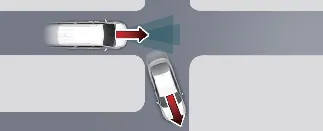
Intersection Scenarios: When a lead vehicle turns or moves out of view at an intersection,
your Kia Carnival may interpret the clear path as an invitation to accelerate toward your set speed.
-
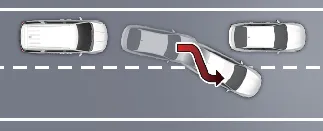
Lane Merging: If a vehicle in front of you merges into another lane, the SCC system may not
immediately lock onto a new vehicle that has entered your path.
-
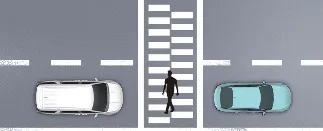
Pedestrian Awareness: Always maintain a proactive watch for pedestrians crossing your path, as
the system's primary focus is maintaining distance from other vehicles.
This device complies with Part 15 of the FCC rules.
Operation of the electronic systems within your Kia Carnival is subject to the following three conditions:
-
This device may not cause harmful interference.
-
This device must accept any interference received, including interference that may cause undesired operation of
vehicle systems.
-
Any changes or modifications to the equipment not expressly approved by the party responsible for compliance
could void the user's authority to operate the device.
This equipment installed in the Kia Carnival complies with FCC radiation exposure limits set forth for an
uncontrolled environment. To ensure safety, this equipment should be installed and operated with a minimum distance
of 8 inches (20 cm) between the radiator (antenna) and your body.
This transmitter must not be co-located or operated in conjunction with any other antenna or transmitter.