The information molded into the sidewall identifies the fundamental characteristics of your Kia Carnival tires and
provides the Tire Identification Number (TIN), which is used for safety standard certification and tracking.
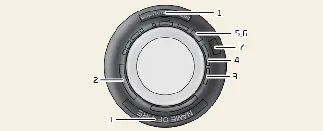
The TIN is a vital string of characters used to identify specific tires in the event of a safety recall.
1. Manufacturer or brand name
The name of the tire manufacturer or the specific brand is prominently displayed on the tire sidewall for
identification.
2. Tire size designation
The sidewall of every tire is marked with a specific size designation. You will need this critical information when
selecting replacement tires for your Kia Carnival to ensure they meet factory safety and performance requirements.
The following breakdown explains what the letters and numbers in the tire size designation signify.
Example tire size designation:
(These numbers are provided as an example only; your specific Kia Carnival tire size designator may vary based on
your trim level and model year.)
P235/55R19 108T
-
P: Applicable vehicle type. Tires marked with the prefix "P" are designed for passenger
vehicles; however, not all tires intended for your Kia Carnival will carry this specific marking.
-
235: Tire width measured in millimeters from sidewall to sidewall.
-
55: Aspect ratio. This represents the tire's section height as a percentage of its total
width.
-
R: Tire construction code (Radial construction).
-
19: Rim diameter measured in inches.
-
108: Load Index. A numerical code corresponding to the maximum load capacity the tire is
engineered to carry safely.
-
T: Speed Rating Symbol. This indicates the tire's designed maximum safe operating speed under
controlled conditions.
Wheel size designation
Wheels are also stamped with vital technical information necessary for selecting correct replacements for your Kia
Carnival. The following explains the markings found on your wheels:
Example wheel size designation:
7.5JX19
-
7.5: Rim width in inches.
-
J: Rim contour designation (specifying the flange profile).
-
19: Rim diameter in inches.
Tire speed ratings
The chart below outlines common speed ratings used for passenger vehicle tires. This rating is part of the tire size
designation found on your Kia Carnival tire sidewall and corresponds to the maximum speed at which the tire can be
operated safely over an extended period.
|
Speed Rating Symbol
|
Maximum Speed
|
|
S
|
112 mph (180 km/h)
|
|
T
|
118 mph (190 km/h)
|
|
H
|
130 mph (210 km/h)
|
|
V
|
149 mph (240 km/h)
|
|
W
|
168 mph (270 km/h)
|
|
Y
|
186 mph (300 km/h)
|
3. Checking tire life
Regardless of their visual condition or tread depth, any tires on your Kia Carnival—including the spare—that are over
6 years old based on their manufacturing date should be retired and replaced. You can determine the production age by
locating the DOT code on the tire sidewall (sometimes found on the inner side). The manufacturing date is derived
from the last four digits of this alphanumeric sequence.
DOT: XXXX XXXX OOOO
The first section of the DOT code identifies the manufacturing plant, tire size, and tread pattern. The final four
digits indicate the specific week and year of production.
For example: DOT XXXX XXXX 1625 indicates that the tire was produced in the 16th week of 2025.
 WARNING: Tire age
Always replace your tires, including the spare, within the manufacturer's recommended time frame. Rubber compounds
degrade over time due to environmental exposure, regardless of usage. Failure to replace tires as recommended can
lead to sudden structural failure, resulting in a loss of vehicle control, which could cause an accident leading to
serious injury or death for occupants of the Kia Carnival.
4. Tire ply composition and material
This designation specifies the total number of layers, or "plies," of rubber-coated fabric and structural materials
that comprise the tire's internal construction. Manufacturers are required to list the specific materials used, which
typically include steel, nylon, polyester, and other synthetic fibers. The letter "R" signifies radial ply
construction—the industry standard for modern vehicles like the Kia Carnival; the letter "D" indicates diagonal or
bias-ply construction; and the letter "B" denotes belted-bias ply construction. Understanding these materials helps
ensure you select the appropriate replacement for your Kia Carnival.
5. Maximum Inflation Pressure
The maximum inflation pressure indicates the absolute highest amount of air pressure that should ever be applied to
the tire. You must never exceed this limit. While this represents the upper threshold, always refer to the vehicle’s
tire information label or the "More Details" section of this manual for the specific, recommended operating inflation
pressure for your Kia Carnival.
6. Maximum load rating
This numerical value indicates the maximum weight in both kilograms and pounds that a single tire is designed to
support. When replacing tires on your Kia Carnival, you must always choose a tire that meets or exceeds the load
rating of the original factory-installed tire to ensure the structural integrity of the vehicle under load.
Quality grades are provided on the tire sidewall, situated between the tread shoulder and the maximum section width,
to help you evaluate tire performance. These ratings provide standardized comparisons for treadwear, traction, and
temperature resistance.
Example grading format:
-
Treadwear: 200
-
Traction: AA
-
Temperature: A
It is important to remember that tire rubber compounds naturally degrade over time, even when the Kia Carnival is not
in active use. Regardless of the remaining tread depth, we strongly recommend replacing your tires after
approximately six (6) years of service. Factors such as operation in hot climates or consistent driving under heavy
load conditions can significantly accelerate the aging and deterioration process.
Tread wear
The treadwear grade is a comparative rating based on the tire's wear rate during testing under controlled conditions
on a government-specified test track. For instance, a tire with a grade of 200 would theoretically last twice as long
as a tire with a grade of 100 under identical testing parameters.
It is vital to note that real-world performance will vary significantly from these test results. Actual tire
longevity depends heavily on individual driving habits, regular maintenance practices, road surface conditions, and
local climate variations. The tires provided as standard or optional equipment on your Kia Carnival may feature
different grades depending on the specific tire model and supplier.
Traction - AA, A, B and C
Traction grades are ranked from highest to lowest as AA, A, B, and C. These grades represent the tire’s ability to
stop safely on wet pavement, measured under strictly controlled conditions on government-standardized asphalt and
concrete surfaces. A tire marked with a "C" grade may demonstrate poor traction performance compared to higher-rated
tires.
Please be aware that this traction grade is determined specifically by straight-line braking tests; it does not
measure or reflect a tire's performance regarding acceleration, cornering, hydroplaning resistance, or peak traction
characteristics.
Temperature - A, B and C
Sustained operation at high temperatures can cause the internal materials of a tire to degenerate, reducing service
life and increasing the risk of sudden structural failure. The "C" grade represents the minimum level of performance
that all passenger vehicle tires must meet under Federal Motor Vehicle Safety Standard No. 109. Grades "B" and "A"
indicate that the tire is capable of performing at higher temperature thresholds on the laboratory test wheel than
the minimum requirements mandated by federal law, providing an extra margin of safety for your Kia Carnival.