To ensure your Kia Carnival remains reliable, regular maintenance of the 12-volt battery is essential. Proper care
not only extends the life of the battery but also prevents unexpected starting issues.
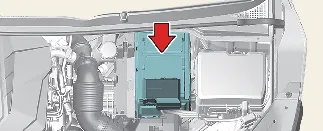
-
Ensure the battery is securely mounted in its tray to prevent vibration damage to the internal plates.
-
Keep the top surface of the battery clean and dry to prevent surface discharge.
-
Regularly inspect battery terminals and cable connections. They must be tight and free of corrosion. For added
protection, coat the terminals with a thin layer of petroleum jelly or high-quality terminal grease.
-
If you encounter spilled battery electrolyte, neutralize the area immediately with a solution of water and
baking soda to prevent corrosion.
-
If your Kia Carnival will be stored or remain unused for an extended period, disconnect the negative battery
cable to prevent the battery from draining completely.
 NOTICE
While most modern Kia Carnival models are equipped with maintenance-free batteries, some versions may feature a
battery with "LOWER" and "UPPER" level marks on the casing. For these specific units, you should periodically verify
that the electrolyte level remains within the indicated range. If the level is low, use only distilled
(demineralized) water—never add sulfuric acid or other additives. When refilling, avoid splashing the battery or
surrounding engine components, and take care not to overfill the cells, as this can lead to severe corrosion. Ensure
all cell caps are tightened securely before closing the hood. If you are unsure about the procedure, contact an
authorized Kia dealer for professional assistance.
 WARNING: Risk of explosion

Keep all lit cigarettes, open flames, and potential sources of sparks far away from the battery at all times.

The battery produces hydrogen—a highly combustible gas. This gas can explode violently if it comes into contact with
a flame, cigarette ash, or an electrical spark.

Keep batteries strictly out of the reach of children. Batteries contain highly corrosive sulfuric acid and toxic
electrolytes. Never allow battery acid to contact your skin, eyes, clothing, or the vehicle's paint finish, as it
causes immediate damage.

Always wear certified eye protection when charging or working near the battery. If working in an enclosed garage,
ensure the area is well-ventilated to prevent the accumulation of hazardous gases.

Always read and follow the instructions provided in your owner's manual carefully whenever handling or servicing the
battery of your Kia Carnival.

If battery electrolyte accidentally comes into contact with your eyes, immediately flush them with clean, lukewarm
water for at least 15 minutes and seek urgent medical attention. If electrolyte touches your skin, wash the affected
area thoroughly with soap and plenty of water. Should you experience any persistent pain, irritation, or a burning
sensation, contact a medical professional immediately.

Improperly discarded batteries pose a severe risk to both the environment and human health due to their toxic
chemical content. Always dispose of your old Kia Carnival battery in strict accordance with your local environmental
laws and municipal waste regulations.

Automotive batteries contain lead, a heavy metal that must be managed carefully. Never throw your used battery in
standard household trash. Instead, return the old unit to an authorized Kia dealer, where it will be properly handled
and processed through an certified recycling program.
To prevent electrical damage to your Kia Carnival vehicle's sophisticated electronic control units (ECUs), never
attempt to recharge the battery while the battery cables remain connected to the vehicle's electrical system.
 WARNING: Risk of electrocution
Never touch the electrical ignition system or high-voltage components while the Kia Carnival engine is running or the
ignition is on. This system operates at high voltage, which can cause severe electrical shock and life-threatening
injury.
 NOTICE
Connecting unauthorized electronic accessories or devices directly to the Kia Carnival battery can lead to excessive
parasitic power draw, causing the battery to discharge rapidly and potentially leaving you stranded. Only use
approved, manufacturer-compatible accessories.
 WARNING: Recharging battery
For the safety of your Kia Carnival onboard electronics, never attempt to recharge the battery while it is still
connected to the vehicle. Always disconnect the battery terminals first.
 WARNING: Battery lead compound
Battery posts, internal terminals, and associated accessories often contain lead and various lead compounds. Always
wash your hands thoroughly with soap and water after handling these components to prevent lead ingestion or
contamination.
 WARNING: California Proposition 65
Battery posts, terminals, and related accessories contain lead and lead compounds—chemicals recognized by the State
of California to cause cancer, birth defects, and other reproductive harm. Furthermore, batteries contain other
chemical compounds known to cause cancer. As a standard safety practice for every Kia Carnival owner, ensure you wash
your hands immediately after any contact with the battery or its components.
Your Kia Carnival is equipped with a high-performance, maintenance-free, calcium-based battery designed for
reliability. Should your battery require recharging, follow these professional guidelines to ensure both safety and
optimal battery longevity.
-
If the battery has been discharged over a short period—for instance, if the headlamps or interior lights were
accidentally left on while the Kia Carnival was parked—restore the charge using a slow-charging (trickle)
method for approximately 10 hours.
-
If the battery has gradually discharged due to a sustained high electrical load during vehicle operation, it
may be recharged at a rate of 20 ~ 30 A for two hours to restore capacity.
When recharging the battery, you must strictly observe the following safety precautions:
-
For safety, remove the battery from your Kia Carnival and place it in a well-ventilated area away from the
vehicle interior.
-
Ensure a strict no-smoking policy and keep all potential sources of ignition, such as sparks or open flames,
away from the battery area.
-
Continuously monitor the battery during the charging process. You must stop the charging process or
significantly reduce the charging rate immediately if:
-
The battery cells begin to exhibit signs of gassing (boiling).
-
The internal electrolyte temperature of any individual cell exceeds 120 °F (49 °C).
-
Always wear approved eye protection when inspecting or monitoring the battery while it is being charged.
-
Before performing any maintenance or initiating the recharging process, ensure that all electrical accessories
are turned off and the Kia Carnival engine is completely stopped.
-
Follow the correct sequence to disconnect the charger:
-
Turn off the battery charger main power switch first.
-
Disconnect the negative (black) clamp from the negative battery terminal.
-
Disconnect the positive (red) clamp from the positive battery terminal.
-
Always remember that when removing the battery from the vehicle, the negative battery cable must be removed
first and reinstalled last to prevent short circuits.
 CAUTION: Absorbent Glass Mat (AGM) battery
-
AGM batteries used in the Kia Carnival are maintenance-free; all servicing must be performed exclusively by an
authorized Kia dealer.
When charging your AGM battery, use only fully automatic battery chargers that are specifically engineered and
approved for AGM battery chemistry.
-
When replacing the AGM battery, ensure you use only genuine parts sourced directly from an authorized Kia
dealer to guarantee compatibility.
-
Never attempt to open or remove the top cap of an AGM battery. Opening the housing can lead to dangerous leaks
of internal electrolyte, which may cause severe chemical burns and permanent injury.
After your Kia Carnival battery has been fully discharged or disconnected for service, several electronic systems may
require a reset to restore their factory functionality:
-
Auto up/down window systems (refer to the relevant section for manual initialization).
-
Climate control system (CCS) settings.
-
Sunroof opening/closing limits.
-
Driver's seat memory position settings.