-
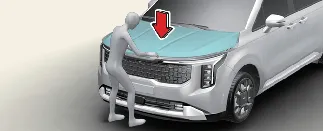
Before lowering the hood, perform a final safety inspection:
-
Ensure all engine fluid filler caps (oil, coolant, etc.) are correctly installed and tightened.
-
Check the engine bay and remove any forgotten tools, gloves, rags, or other combustible materials.
-
Lower the hood to approximately 10–12 inches (25–30 cm) and allow it to drop, or firmly push down to ensure
both primary and secondary latches are fully engaged.
-
Verify that the hood is locked properly. If the hood can be lifted even slightly, it is not securely engaged;
open it again and close it with slightly more force.
 CAUTION
Hood Obstruction: Ensure the hood opening area is clear of tools or accessories. Closing the hood on
an obstruction can cause significant damage to the vehicle's bodywork and hinges.
 WARNING
Fire Risk: Never leave rags, paper, or any flammable items inside the engine compartment. Residual
engine heat can ignite these materials, leading to an engine bay fire.
 WARNING
Unsecured Hood: Always double-check that the hood is firmly latched before driving your Kia
Carnival. An unlatched hood can fly open suddenly while the vehicle is in motion, completely obstructing
your visibility and leading to a serious accident.