To safeguard the sophisticated electrical architecture of your Kia Carnival, the vehicle is equipped with various
fuses designed to prevent damage from electrical overloads or short circuits. Understanding how to identify and
inspect these components is essential for routine owner maintenance.
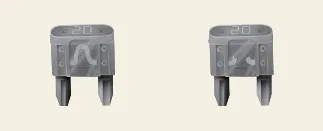
Blade type
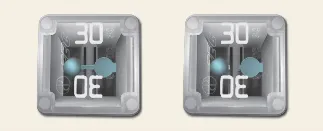
Cartridge type
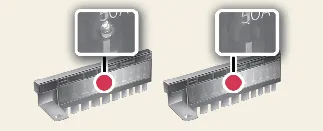
Multi fuse
High voltage fuse
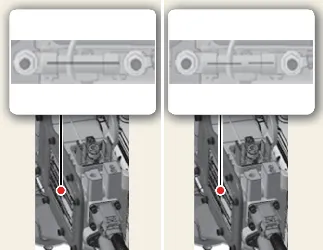
* Left side: Normal condition, Right side: Blown (melted) element.
* Note: The actual layout and labels on your specific fuse/relay panel may vary slightly depending on the production
date and trim level of your Kia Carnival.
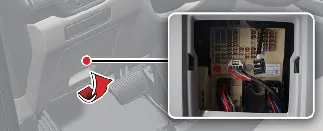
Your Kia Carnival typically utilizes 2 or 3 centralized fuse panels: one is conveniently located behind the driver's
side dashboard bolster, while others are situated in the engine compartment, usually positioned near the battery.
If you experience an issue where specific lights, infotainment accessories, or vehicle controls become unresponsive,
the first step is to inspect the corresponding circuit fuse. A blown fuse is easily identified by a broken or melted
metallic element visible through the translucent casing.
If electrical functions are lost, we recommend starting your inspection at the driver's side cabin fuse panel. If you
replace a fuse and it blows again immediately, this signals a deeper electrical short or fault. In such cases,
discontinue use of the affected system and contact an authorized Kia dealer for professional diagnosis.
The Kia Carnival electrical system employs three distinct fuse formats: blade-type fuses for lower amperage circuits,
cartridge-type fuses for moderate loads, and multi-fuses designed to handle high-amperage power distribution.
 WARNING: Fuse replacement
-
Never replace a blown fuse with one of a different rating. Always use a fuse with the exact same amperage to
ensure the circuit remains properly protected.
-
Installing a higher-capacity fuse is dangerous and can lead to severe wiring harness damage or an engine
compartment fire.
-
Never bypass a fuse by using wire, aluminum foil, or any other conductive material, even for a "temporary" fix.
This creates a significant fire hazard and can cause permanent, costly damage to the electrical system of your
Kia Carnival.
-
Do not modify, cut, or add unauthorized electrical wiring to your vehicle, as this may overload existing
circuits and void your warranty.
 CAUTION
Always use the dedicated fuse puller tool provided in the fuse panel cover. Do not use a screwdriver, metal pliers,
or other conductive objects to remove fuses, as these can easily cause a short circuit and trigger a failure in other
vehicle systems.
 NOTICE
-
Before replacing any fuse in your Kia Carnival, you must switch the ignition to the 'OFF' position and turn off
all electrical accessories. For added safety, it is recommended to disconnect the negative (-) battery
terminal.
-
Always ensure the new fuse is seated firmly in its socket before reconnecting power and testing the system.
Please note that the specific layout and labeling of the fuse and relay panel in your vehicle may differ from the
descriptions provided, depending on the specific equipment and trim level of your Kia Carnival.
 WARNING: Electrical fire risk
When installing replacement fuses or relays, always ensure they are fully seated and securely fastened within their
respective slots. A loose connection can lead to increased electrical resistance, overheating, and potentially a
serious vehicle fire. Do not attempt to remove or modify fuses, relays, or terminals that are fastened with bolts or
nuts. These components are specifically secured for safety; if you suspect one of these fixed components has failed
or blown, you must consult with an authorized Kia dealer immediately for repair.
 CAUTION
When replacing a blown fuse or relay, verify that the new component fits tightly into the retaining clips. A loose or
improper fit can cause significant damage to the sensitive wiring harnesses and electrical control systems of your
Kia Carnival.
 CAUTION
-
Never insert tools, such as screwdrivers, or improper wiring into fuse or relay terminals. Doing so can cause
contact failure, short circuits, and permanent malfunction of the vehicle's electrical systems.
-
Only use terminals for their intended purpose. Connecting aftermarket wiring or using metal tools in these
slots may cause the internal wiring of your Kia Carnival to overheat or burn due to poor electrical contact.
-
Exercise caution when installing accessories such as trailer lighting. If you directly splice into existing
taillamp wiring or install bulbs that exceed the regulated power capacity, you risk burning out the inner
junction block of the Kia Carnival.
 WARNING: Electrical wiring repairs
For your safety, all electrical system repairs should be performed exclusively by an authorized Kia dealership using
genuine, factory-approved parts. The use of non-compliant wiring components—especially when retrofitting multimedia
systems, dash cams, or aftermarket alarm systems—can cause extensive vehicle damage and drastically increase the risk
of an electrical fire in your Kia Carnival.
 NOTICE: Rewiring prohibited
Unauthorized rewiring or modification of your Kia Carnival electrical system is strictly prohibited. Modifying the
factory wiring can negatively impact the performance of critical safety features and advanced driver assistance
systems. Furthermore, such modifications may void your vehicle's warranty, leaving you solely responsible for any
subsequent damage or electrical failures that occur as a result of the work.
Inner panel fuse replacement
To safely replace an interior fuse in your Kia Carnival, follow these professional steps. Please ensure you work in a
well-lit environment and use the correct tools.
-
Turn the ignition switch or ENGINE START/STOP button to the 'OFF' position and verify that all electronic
switches are also turned off.
-
Locate and carefully open the interior fuse panel cover found on the driver's side dashboard bolster.
-
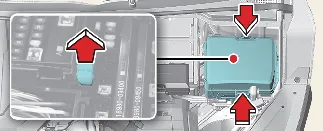
Identify the suspected faulty fuse. Use the dedicated fuse removal tool, which is conveniently provided in the
main engine compartment fuse box, to pull the fuse straight out of its socket.
-
Inspect the removed fuse by looking through the translucent casing; if the internal metal wire is broken or
melted, the fuse is blown and must be replaced. Spare fuses are provided directly within the instrument panel
fuse box or the engine compartment fuse box for your convenience.
-
Insert a new fuse of the exact same amperage rating into the terminal. Ensure it fits snugly into the metal
clips; if you notice the fuse fits loosely, consult your local authorized Kia dealer to avoid potential contact
issues.
If you do not have a spare fuse of the required rating, you may temporarily use a fuse from a non-essential circuit
(such as the cigarette lighter or auxiliary power outlet), provided it carries the same amperage rating. Should
primary lighting systems—including headlights, taillights, stoplights, or daytime running lights (DRL)—fail to
function despite the fuses being intact, please contact an authorized Kia dealer for expert electrical system
diagnosis.